
- August 24, 2026
- Posted by: admin admin
- Categories: Finance & accounting, Global Supply Chain, Innovation, Reverse Logistics
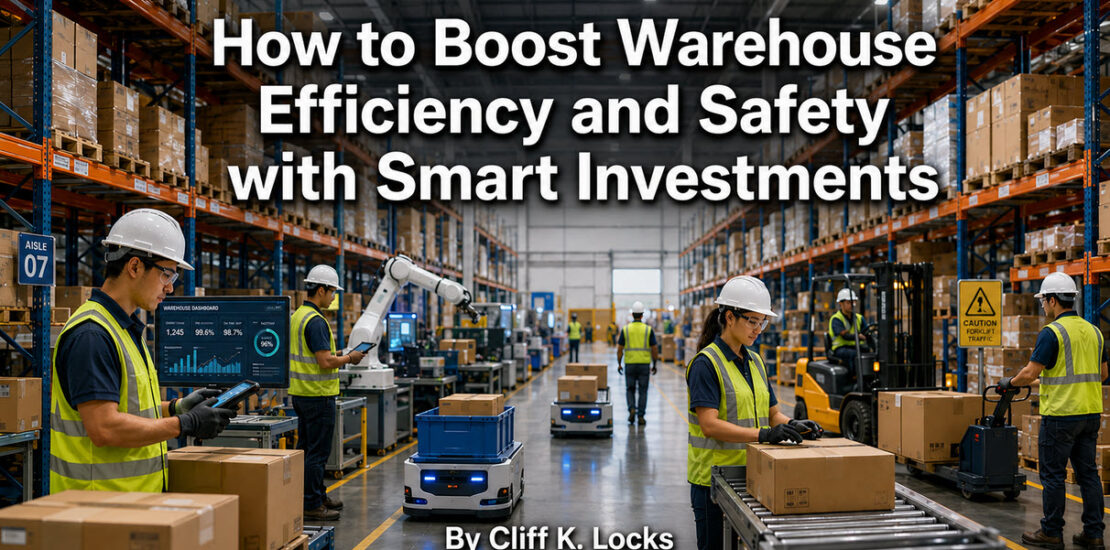
For operations leaders and warehouse managers, warehouse efficiency challenges rarely look like one big failure, they show up as small delays, rework, and near-misses that stack up across every shift. The core tension is keeping throughput high while safety management in warehouses stays consistent, even when volume, staffing, and space change week to week. Inventory handling issues like mispicks, damaged goods, and unclear locations quietly erode confidence in the numbers and slow decisions. Targeted warehouse operations improvement turns logistics optimization into a repeatable standard.
Invest in 5 Upgrades That Move the Efficiency and Safety Needle
If your dashboard shows “acceptable” numbers but the floor tells a different story, mispicks, travel time, damage, and near-misses, these upgrades target the hidden bottlenecks that quietly tax throughput and morale.
- Automate the most repeatable touches first: Start with warehouse automation technologies that remove manual variability from high-volume steps, print-and-apply labeling, weigh/dimension checks, stretch-wrapping, or automated sortation at pack-out. Pick one workflow with stable demand and document the current cycle time, error rate, and labor hours for 2–4 weeks, then automate that slice. This works because it reduces rework and “micro-delays” that don’t show up as one big downtime event but compound across every shift.
- Tighten accuracy with inventory management software + scan discipline: Prioritize inventory management software that enforces scanning at every custody change: receive, putaway, replenish, pick, pack, and ship. Build simple rules such as “no scan, no move,” require exception codes for overrides, and run a daily report on the top 10 error locations or SKUs. When inventory inaccuracies can cost facilities up to 10% of their annual revenue, tightening verification is often the fastest way to reduce stock outs, overstocks, and time-wasting expedites.
- Standardize workforce safety protocols around the highest-risk moments: Don’t settle for generic training, turn safety into a repeatable operating system. Map your top three incident scenarios (for many sites it’s forklift/pedestrian interaction, dock edges, and manual lifting) and create a one-page standard for each: required PPE, right-of-way rules, speed limits, and a “stop-work” trigger. Reinforce it with 5-minute weekly safety huddles plus a near-miss log that supervisors review within 24 hours so hazards get fixed before they become injuries.
- Optimize layout to cut travel, congestion, and damage: Use a simple “from-to” analysis: pick 20 fast-moving SKUs and measure how far they travel from reserve to pick to pack. Re-slot A-movers closer to pack-out, separate forklift lanes from pedestrian routes with clear markings, and create dedicated staging zones so pallets don’t creep into aisles. A layout tweak is a safety upgrade as much as an efficiency one, it reduces passing, blind corners, and rushed maneuvering during peak waves.
- Upgrade material handling equipment where labor and risk concentrate: Target the tasks where fatigue and handling damage spike: long pushes, high lifts, or repeated pallet repositioning. Add the right mix of lift-assist devices, pallet movers, conveyors, and vertical storage to reduce touches and awkward postures, and set maintenance triggers based on hours/starts rather than “when it breaks.” In many operations, savings of up to 50% in labor costs can come from choosing equipment that removes non-value-added walking and waiting.
Use Rugged Edge Systems to Make Real-Time Warehouse Decisions
Investing in smart logistics technologies like real-time data systems and edge computing helps you keep tighter control of asset tracking, so inventory, pallets, and equipment don’t disappear into blind spots as work accelerates. With on-site processing, automation can respond immediately to live inputs instead of waiting on round-trip cloud connections, which supports higher throughput and smoother handoffs across the floor. It also improves overall operational efficiency by keeping operational data usable in the moment, even when connectivity is inconsistent, so decisions stay dependable in the places where delays are most costly.
To make that shift practical, look at edge computing for logistics operations and plan around a hardware platform that delivers exceptional processing speed while still enduring the tough environments of large warehouses, intricate transport systems, and expansive distribution networks.
Warehouse Upgrade FAQs: ROI, Rollout, and Training
Q: What’s the smartest way to justify the spend on safety and efficiency upgrades?
A: Start by calculating more than the purchase price, including install time, maintenance, downtime risk, and expected savings. A solid Total Cost of Ownership view helps you defend the investment with real operating numbers. Document your baseline first so improvements are easy to prove.
Q: How long does it usually take before we see a return?
A: Timelines vary, but you can shorten them by piloting one workflow first, like receiving or picking. Track a few leading indicators weekly such as cycle time, error rates, and incident near-misses. Expand only after you can show consistent gains.
Q: What if implementation disrupts operations and slows shipping?
A: Plan for staged cutovers, off-peak installs, and a back-out plan if performance dips. A practical cost-benefit analysis weighs expected gains against the disruption of reconfiguring space. Make one supervisor accountable for daily issue triage during rollout.
Q: How do we reduce employee training friction and pushback?
A: Train by role with short, hands-on scenarios, not long classroom sessions. Pick floor champions per shift, then build simple job aids with photos and “what to do when” steps. Reward early adoption by recognizing safer, faster work habits.
Q: Can we scale upgrades without locking into one vendor or ripping out systems later?
A: Choose modular tools that integrate through standard APIs and use repeatable hardware and mounting patterns. Standardize on a few device types, then add lanes, zones, or sites using the same configuration playbook. Require measurable performance benchmarks in every contract.
Plan, Pilot, and Prove Warehouse Upgrade ROI
These steps turn “we think it’ll help” into a practical plan you can defend with numbers. Even if you are not a warehouse expert, you can use this roadmap to choose upgrades that improve safety and throughput without guessing.
- Set your baseline and define success
Start by capturing a simple “before” picture for one or two workflows, such as receiving, putaway, picking, or shipping. Record a few easy metrics like lines per hour, rework counts, damaged product, and near-miss reports so you can prove improvement later. Agree on a realistic target and timeframe so everyone measures progress the same way. - Pick the smallest set of high-impact fixes
List the top bottlenecks and safety risks, then match each to one investment that reduces the problem without adding complexity. Prioritize options you can install and support with your current team, and that have clear operating benefits like fewer touches, less travel, or reduced congestion. A good short list is usually two to three upgrades, not ten. - Map how the solution fits your daily work
Sketch the new “future” process in plain steps: who does what, with which device or layout change, and where exceptions go. Plan integration points early, including how data will move into your existing systems and how you will handle downtime. Assign one owner for decisions and one owner for floor-level issue triage to keep the rollout moving. - Train by role and pilot in a controlled area
Create short practice scenarios for each role and run them in the exact zone you will pilot, using the real equipment and labels people will touch. Start with one shift or aisle, set safety rules for mixed traffic, and keep a rollback option if service levels dip. Treat early feedback as part of the plan, not resistance. - Track results weekly and confirm what worked
Review the same baseline metrics on a steady cadence and compare them to your targets so the story is clear. A simple visibility check helps leaders see which investments deserve attention, which are consuming capacity, and which have produced the expected effect. If the pilot performs, scale using the same checklist and retire anything that did not earn its keep.
Turn Smart Warehouse Investments Into Safer, Faster Daily Work
Warehouses often feel caught between moving more volume and keeping people safe, with tight budgets leaving little room for mistakes. The path forward is a practical, data-led mindset: apply warehouse operational best practices, pilot changes, and use simple benchmarks to create an investment impact summary that reflects real work on the floor. Done consistently, those choices compound into measurable efficiency and safety gains and a calmer, more predictable operation. Measure first, invest smart, and let proof, not pressure, set your priorities.
Unlock hidden value in getting the Executive Coaching you need from Cliff K. Locks at Investment Capital Growth. Learn how you can transform your team into a strategic advantage, minimizing costs and maximizing customer satisfaction through expert insights and innovative strategies. Plus, add Generative AI tools and smart AI Agent Automation. Together, we can optimize your operations and drive profitability today!
Discover how Reverse Logistics Solutions can transform your product returns into a strategic advantage, enhancing customer satisfaction and reducing costs with expert guidance and innovative strategies.
Authored by: Cliff K. Locks, Reverse Logistics Solutions
#BusinessGrowth #SMBSuccess #Entrepreneurship #ScalingBusiness #CustomerExperience #MarketingStrategy
Other Blog Post that you may be interested in:
Scaling Smart: Proven Strategies for Your Company Success
How can we help you?
CONTACT US